
Bioinspired robotics
Fall 2026: ROB 560 / ME 547
Lecture, Discussion, and Lab course (4 credits)
No prerequisites, open to grad students and advanced undergrad students in any program/department
Fulfills Acting requirement for Robotics major and grad programs
Fulfills cognate requirement for Ecology and Evolutionary Biology major and grad programs
Lecture: MW 10:30-11:30am
Discussion: M 12:30-1:30ap
Lab: M 1:30-2:30pm


Learning from Nature to Design for the Future!
Bioinspired design views the process of how we learn from Nature as an innovation strategy translating principles of function, performance and aesthetics from biology to human technology. The creative design process is driven by interdisciplinary exchange among engineering, biology, medicine, art, architecture and business. Diverse teams of students will collaborate on, create, and present original bioinspired design projects. Lectures will address the biomimicry design process from original scientific breakthroughs to functional prototypes using cases studies that include gecko-inspired adhesives, robots that run, artificial muscles, computer animation, and prosthetics while highlighting health, the environment, and safety.
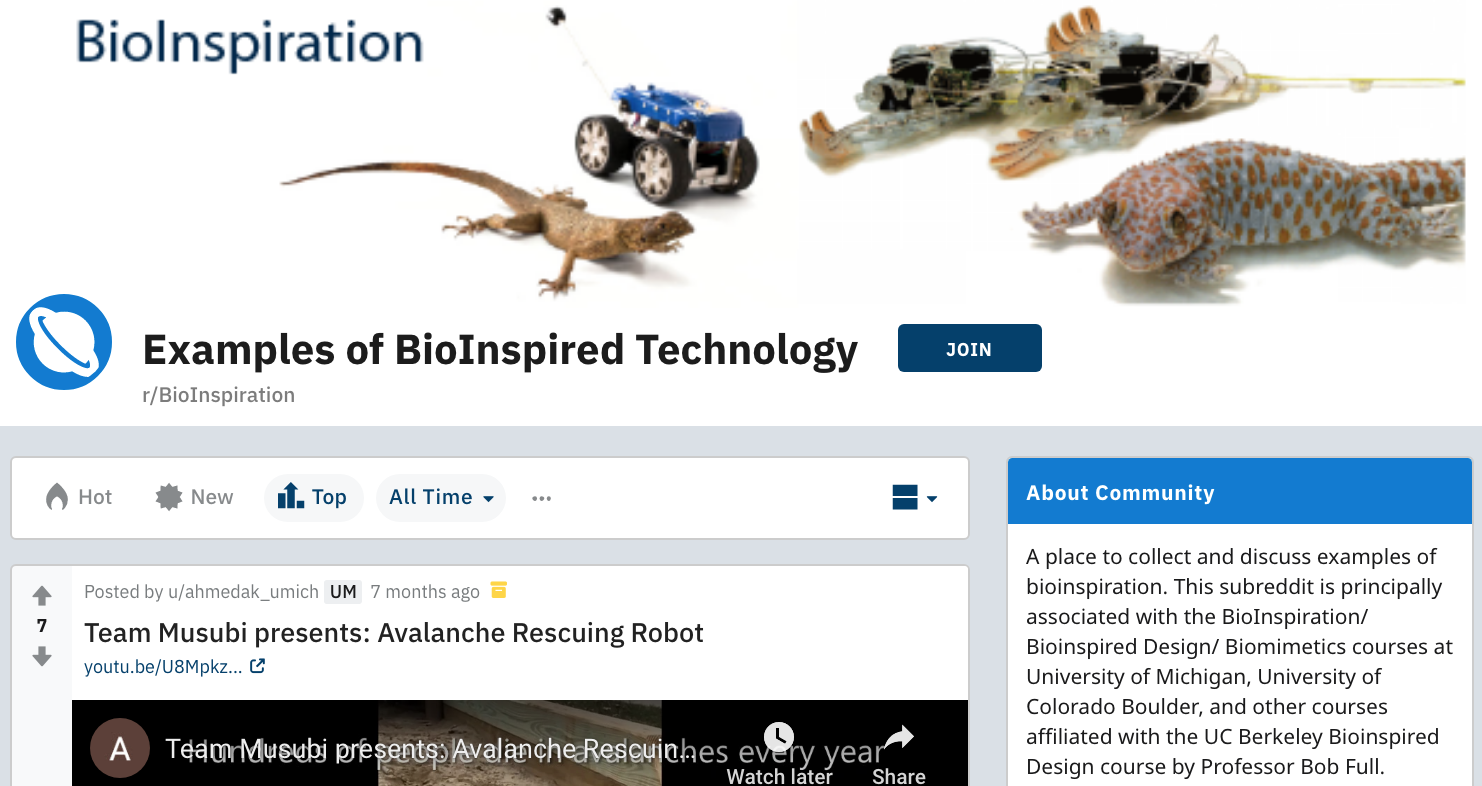
Plug In to the BioInspiration Community
We post and discuss recent advances in the global BioInspiration community in our subreddit

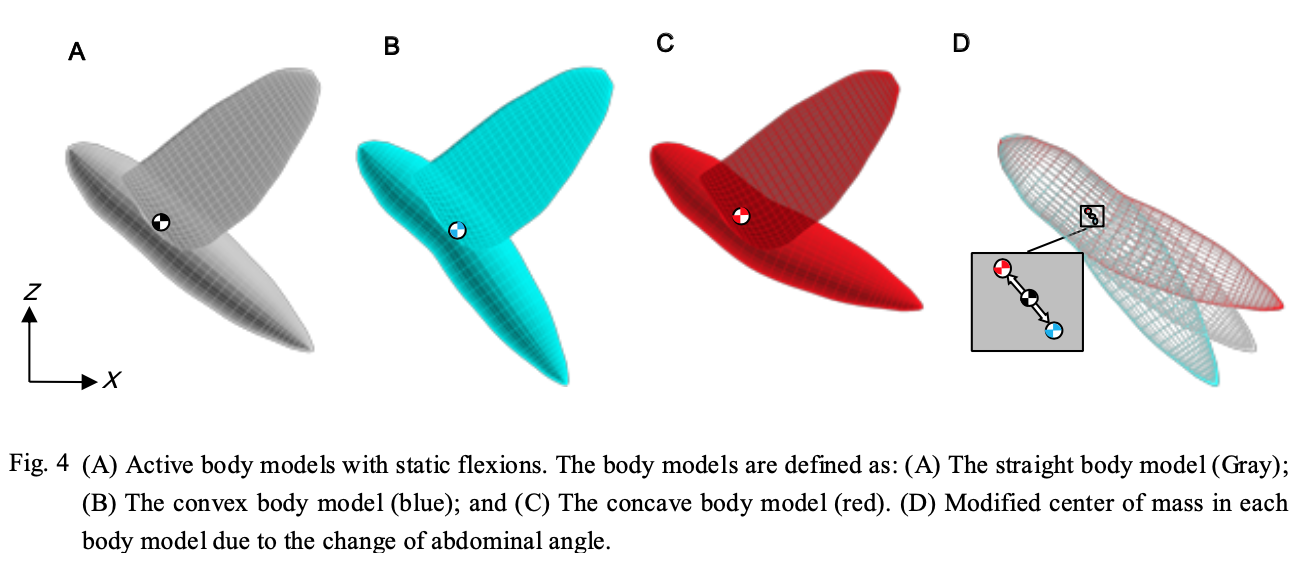
Students will learn how to search for and understand relevant research in biological primary scientific literature (i.e. peer-reviewed journal articles). From these original scientific discoveries, students will then identify a mechanistic biological principle that can be abstracted and applied to engineering design. Students will systematically assess the strength of the analogy between the biological inspiration and the novel design.
The laboratory activities enable the students to apply the design strategies from the lectures as they work in interdisciplinary teams. These labs change from year to year, but will involve legged robotics, soft robotics, control, and an open-ended design project of the students’ choice. In the lab presentations, students will explicitly learn tips for successful interdisciplinary teamwork. Assignments will be in the style of peer-reviewed research and will include elements related to collaborative goal-setting, assigning roles based on individual strengths, and aiming for equitable contribution.